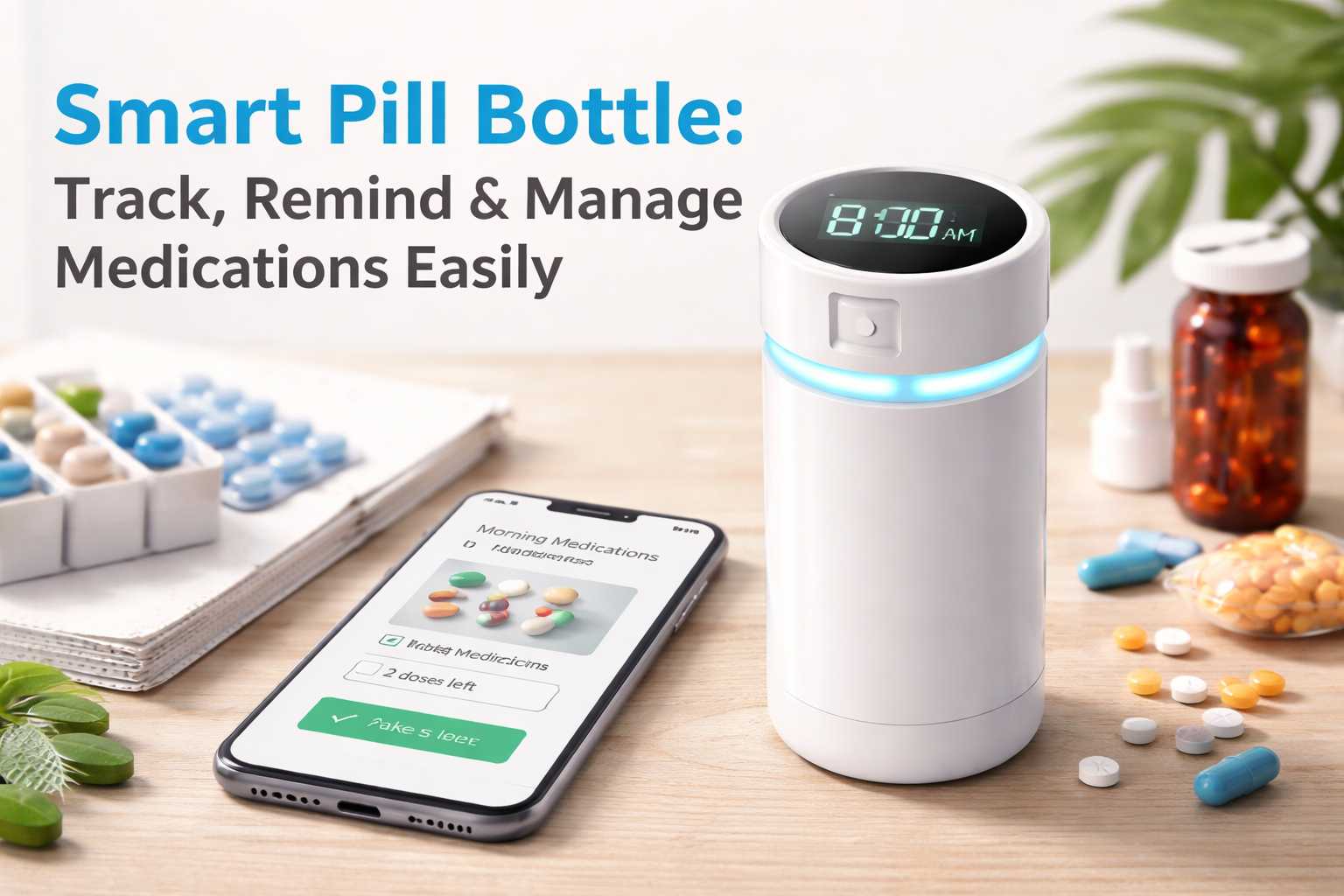
Smart pill bottle technology is reshaping how people take control of their medications by removing guesswork, missed doses, and daily stress from treatment routines. Medication non-adherence remains one of the biggest silent health risks worldwide, affecting chronic patients, elderly users, caregivers, and even busy professionals. This single problem leads to worsening conditions, unnecessary hospital visits, and avoidable healthcare costs. A smart pill bottle directly addresses this issue with precision, automation, and accountability.
Unlike traditional pill containers, this device does not rely on memory or manual effort. It actively participates in the user’s health routine. It tracks, reminds, records, and alerts in real time. That shift from passive storage to active management is what makes it transformative rather than optional.
Understanding Medication Adherence Problems
Medication adherence fails for predictable reasons. People forget doses, misunderstand instructions, or lose track of whether they already took a pill. This happens across all age groups, not only among seniors. Busy schedules, travel, sleep disruption, and complex prescriptions make consistency difficult.
Doctors often assume patients follow prescriptions exactly, but data prove otherwise. Missed doses reduce treatment effectiveness. Double-dosing increases risk. Skipped medication creates a long-term health decline that often goes unnoticed until symptoms worsen.
A smart pill bottle intervenes at the behavioral level. It does not depend on discipline or motivation. It replaces unreliable memory with verifiable action.
What Makes a Smart Pill Bottle Different
A standard pill bottle holds medication. A smart pill bottle manages medication behavior. That difference is structural, not cosmetic.
The bottle contains sensors that detect when it is opened, closed, or accessed. Time-stamped data is stored locally or synced to a mobile app. When a scheduled dose is missed, the system triggers reminders through sound, light, smartphone notifications, or even text messages.
The device creates a digital medication log automatically. There is no need to press buttons or manually confirm doses. Every interaction is captured objectively.
This eliminates confusion, such as “Did I take it already?” which is one of the most common causes of dosing errors.
Core Technology Inside the Device
The intelligence of a smart pill bottle comes from a combination of hardware and software working in sync. Motion sensors and pressure sensors identify bottle access with accuracy. Internal clocks ensure precise time tracking. Bluetooth or cellular connectivity enables real-time communication with companion apps or caregiver dashboards.
Battery systems are optimized for long-term use, often lasting weeks or months without recharge. Firmware is designed to remain stable, secure, and responsive even with daily use.
On the software side, mobile applications provide scheduling, reminders, dosage instructions, and history reports. These apps are not generic add-ons. They are core to the experience, turning raw sensor data into actionable insights.
Real-Time Reminders That Demand Attention
Reminders are the most visible feature, but their effectiveness depends on execution. Weak reminders fail. Strong reminders interrupt behavior.
A smart pill bottle uses escalating alerts. Initial reminders may be subtle. If ignored, alerts become more persistent. This design mirrors human accountability, not passive notification systems that users learn to ignore.
Visual cues such as LED rings, audible tones, and vibration work together to ensure the reminder is noticed even if the phone is not nearby. This redundancy is intentional and effective.
Automatic Dose Tracking Without Manual Input
Manual tracking apps fail because they rely on user honesty and consistency. People forget to log doses even when they remember to take them. This creates inaccurate data and false confidence.
A smart pill bottle removes manual input entirely. Opening the bottle at the scheduled time logs the dose. Opening it outside the schedule triggers alerts or warnings. This data reflects real behavior, not intentions.
For doctors and caregivers, this accuracy matters. Treatment decisions depend on knowing whether medication is being taken correctly.
Caregiver and Family Monitoring
One of the most powerful benefits of a smart pill bottle is remote oversight. Family members can monitor adherence without constant phone calls or intrusive supervision.
Caregivers receive alerts when doses are missed repeatedly. This allows early intervention before health declines. It also reduces emotional strain because monitoring becomes data-driven rather than confrontational.
For elderly patients living independently, this feature extends autonomy rather than reducing it. They maintain control while caregivers gain visibility.
Support for Chronic Conditions
Chronic illnesses demand strict medication routines. Conditions such as diabetes, hypertension, heart disease, and neurological disorders worsen rapidly when adherence slips.
A smart pill bottle fits naturally into long-term treatment plans. It creates consistency over months and years, not just during short recovery periods.
Doctors can review adherence reports during follow-up visits. Adjustments are made based on facts, not assumptions. This leads to better outcomes and fewer trial-and-error prescription changes.
Reducing Medication Errors
Medication errors occur when patients take the wrong dose, take it at the wrong time, or mix medications incorrectly. These errors are common and dangerous.
Smart pill bottles reduce these risks by enforcing schedules and highlighting irregular behavior. Some systems integrate with medication databases to display instructions and warnings directly in the app.
When combined with physician guidance, this creates a closed loop of safety that traditional pill storage cannot match.
Integration With Healthcare Systems
Modern healthcare is data-driven. A smart pill bottle generates data that fits naturally into this model.
Many devices support exporting adherence reports in formats compatible with electronic health records. This enables seamless sharing between patients, doctors, pharmacists, and caregivers.
This integration strengthens trust. Patients know their effort is visible. Doctors know their instructions are followed. Pharmacists gain insight into refill timing and compliance.
Privacy and Data Control
Health data demands strict privacy standards. Leading smart pill bottle systems encrypt data both in storage and during transmission.
Users control who can access their medication history. Permissions can be granted or revoked at any time. This protects autonomy while enabling collaboration when needed.
Responsible manufacturers design systems that comply with medical data regulations rather than treating privacy as an afterthought.
Design for Daily Use
A smart device fails if people resist using it. Successful smart pill bottle designs focus on simplicity.
The bottle feels familiar. It fits in cabinets, bags, and drawers without drawing attention. The interface avoids complexity. Most actions happen automatically.
Charging is infrequent. Setup is guided. Day-to-day interaction feels effortless. This design philosophy ensures long-term adoption instead of novelty-driven abandonment.
Cost Versus Value
Some users hesitate because of the upfront cost. This perspective ignores long-term value.
Missed medication leads to doctor visits, emergency care, and complications that cost far more than the device itself. Improved adherence reduces these downstream expenses significantly.
For caregivers, time saved is valuable. For patients, independence preserved is priceless. A smart pill bottle is not a gadget. It is a preventative tool.
Use in Clinical Trials and Research
Beyond personal use, smart pill bottles are becoming standard in clinical research. Accurate adherence data improves trial validity.
Researchers no longer rely on self-reported compliance. This reduces bias and improves confidence in results. Pharmaceutical companies and research institutions increasingly adopt this technology as a baseline requirement.
This trend reinforces the legitimacy and reliability of smart medication tracking.
Adaptability Across Lifestyles
Medication routines differ widely. Some users take one pill daily. Others manage complex schedules with multiple prescriptions.
Smart pill bottles adapt to both extremes. Scheduling flexibility allows precise customization. Reminders can be aligned with meals, sleep patterns, or work shifts.
This adaptability ensures relevance across age groups, professions, and health conditions.
Addressing Common Objections
Some people resist technology in healthcare. They worry about complexity or dependence.
A smart pill bottle does not replace human judgment. It supports it. It does not force compliance. It provides structure.
Once users experience fewer missed doses and reduced anxiety, resistance fades quickly. Behavior change becomes effortless when the system works quietly in the background.
Role in Preventive Healthcare
Preventive healthcare depends on consistency. Medication is only effective when taken as prescribed.
By ensuring regular adherence, smart pill bottles prevent deterioration before symptoms appear. This shifts healthcare from reactive to proactive.
Prevention saves lives, reduces costs, and improves quality of life. Tools that enable prevention deserve serious consideration.
Adoption Trends and Market Growth
Healthcare systems are moving toward connected devices. Smart pill bottles fit perfectly within this ecosystem.
Adoption is accelerating among hospitals, insurers, and home care providers. Insurance coverage is expanding as cost-benefit data becomes undeniable.
This momentum signals that smart medication management is not temporary. It is becoming standard practice.
Final Perspective on Smart Medication Management
Technology earns its place when it solves real problems without creating new ones. The smart pill bottle succeeds because it targets a specific, widespread issue with clarity and discipline.
A pill bottle replaces forgetfulness with structure. It replaces assumptions with data. It strengthens patient autonomy while supporting caregivers and clinicians.
As medication regimens grow more complex, tools that ensure accuracy and consistency are no longer optional. A smart pill bottle stands as one of the most practical and impactful advancements in everyday healthcare, proving its value every time a dose is taken correctly.